- Property
- Single-storey detached new build
- Stage inspected
- Waterproofing
- Standard referenced
- AS 3740-2021 — Waterproofing of Domestic Wet Areas
- Location
- Morayfield, Moreton Bay
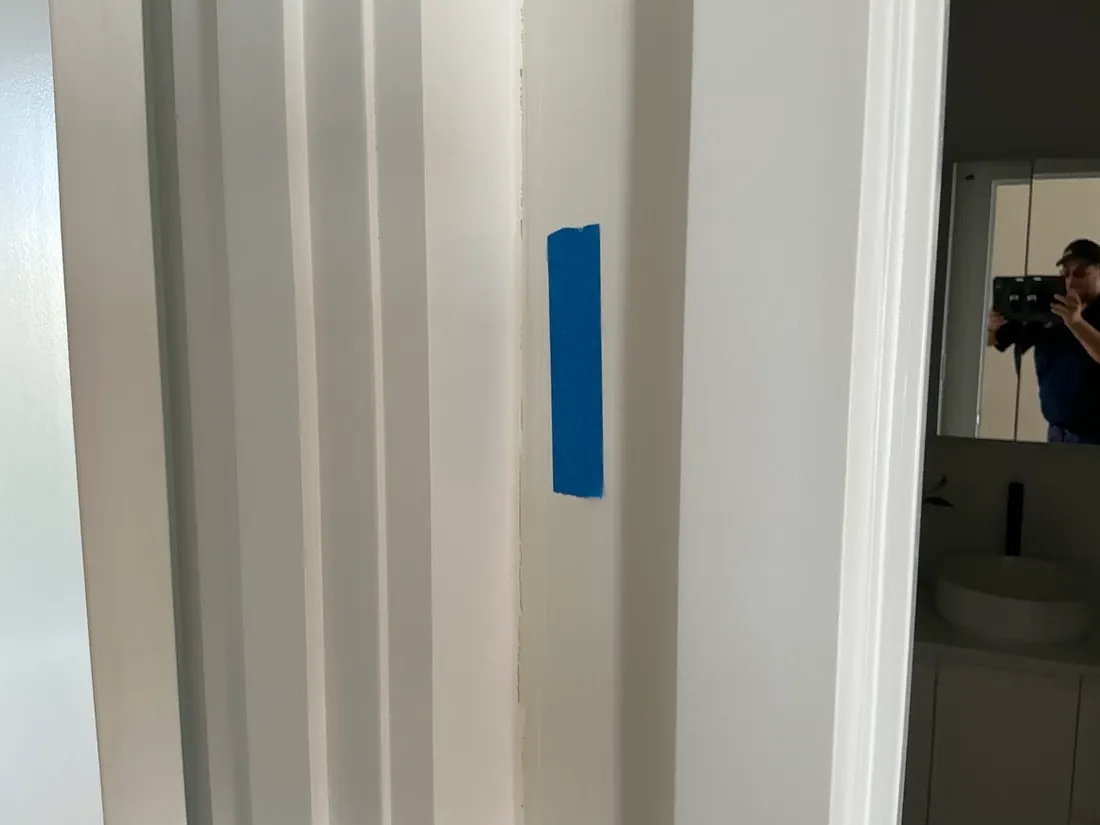
The build at a glance
This case study covers a single-storey detached new build in Morayfield, in the Moreton Bay region north of Brisbane. The home had reached the waterproofing stage: the wet areas — bathrooms, ensuite and laundry — had been waterproofed, the membrane applied to floors, upturns and flashings, but the screed and tiles had not yet gone down.
VG Inspect was engaged by the homeowner for an independent waterproofing inspection. The builder was running their own quality processes and the waterproofing had been carried out by their trade. Our role was to add an independent verification at the single most failure-prone, highest-consequence stage of the entire build, in the narrow window after the membrane is applied and before it is covered by screed and tiles forever.
Waterproofing has the tightest inspection window of any stage and the highest stakes if it is missed. The membrane is only visible for a matter of days between application and tiling. After that, the only way to inspect it is to remove the tiles.
Why the waterproofing stage matters
Waterproofing is the highest-consequence stage of a new home build — higher even than the slab. A failed wet-area membrane is the single most common and most expensive defect in Australian housing. When a membrane leaks, water tracks into the wall framing, the subfloor and adjoining rooms, causing timber rot, mould, damaged plasterboard and ruined flooring. By the time the symptoms appear — usually months or years after handover — the rectification means stripping out the tiles, the screed and often the wall linings of the wet area, re-waterproofing, and reinstating everything. It is one of the most disruptive and costly repairs a homeowner can face.
The asymmetry is severe. A membrane defect caught while the waterproofing is still visible is a touch-up the trade can complete in well under a day. The same defect caught after tiling is a full wet-area strip-out. This is why the timing of a waterproofing inspection is so deliberate: it has to happen after the membrane is applied and cured but before screeding and tiling begin, which is often a window of only a few days.
What the standard requires
The governing standard is AS 3740-2021, Waterproofing of Domestic Wet Areas. AS 3740 sets out exactly which surfaces in a wet area must be waterproofed and to what extent, and the details that make a membrane actually watertight rather than merely present.
Several requirements are central. The shower floor must be fully waterproofed, and the membrane must turn up the walls of the shower to the minimum height the standard requires. The walls of the wet area must be waterproofed to specified heights, with the area around the shower treated more extensively than the rest of the room. Upturns at the junction of floor and wall — the most vulnerable point in any wet area, because that is where water naturally collects and tries to escape — must be continuous and properly formed, with no pinholes or thin spots at the internal corners. Penetrations for the floor waste, tap sets and shower outlet must be sealed and flashed so water cannot track around them. The floor waste must sit at the low point so water drains to it rather than pooling against a wall.
AS 3740 also requires the membrane to be continuous and applied at the right thickness — a membrane that is too thin, or that has gaps, bubbles or pinholes, will fail even though it looks complete to the eye. The standard works alongside the substrate and the falls in the screed to produce a wet area that sheds water reliably for the life of the home. You can read plain-English summaries of these requirements among the Australian Standards we work to.
How an independent inspector checks it
A waterproofing inspection works around each wet area in turn. We confirm the membrane covers all the surfaces AS 3740 requires — the full shower floor, the wall upturns at the correct heights, the walls around the shower, and the floor of the room generally — and that nothing required has been missed. The upturns at every floor-to-wall junction get close attention, because the internal corners are where pinholes and thin application most often occur, and they are the most consequential place for a membrane to fail.
Penetrations are checked individually: the floor waste, the shower outlet and any tap or mixer penetrations must be sealed and flashed so the membrane is continuous around them. We confirm the floor waste is at the low point and that the falls direct water toward it rather than allowing it to pool. We check the membrane for continuity, looking for gaps, bubbles, pinholes, thin spots, and any damage that has occurred to the membrane after application, since a membrane can be applied perfectly and then nicked by a following trade before tiling.
We also confirm the membrane has been allowed to cure before any covering work begins, because tiling over an uncured membrane compromises the whole system.
On these wet areas, the specific findings — and the exact details — are property-specific. In the [ADAM TO FILL: room] the membrane upturn measured [ADAM TO FILL: actual height]mm against the [ADAM TO FILL: required]mm height required by AS 3740, and we recorded [ADAM TO FILL: specific membrane finding] at the [ADAM TO FILL: location]. Each item was photographed and referenced in the report: [ADAM TO FILL: photo references], and tied to the relevant clause of AS 3740-2021 so the builder's trade had a precise, actionable list to address before tiling.
Rectification and re-inspection
Because the inspection happened while the membrane was still exposed and before any screed or tiles, the builder had a clear window to respond. This is what makes an independent waterproofing inspection a constructive tool rather than a confrontation: the report is a short, specific punch list the waterproofing trade can clear, usually with a touch-up coat or an additional pass at the flagged areas, completed in well under a day.
[ADAM TO FILL] The builder's response and the rectification specifics go here — what was re-coated or re-flashed, who attended, and how long it took. Once the rectification was complete and cured, we re-inspected the wet areas against the original report and confirmed each flagged item was resolved before tiling commenced, so the homeowner has documented evidence that the membrane was right before it was sealed in.
[ADAM TO FILL] The final outcome and any direct quote from the builder or homeowner go here.
What this means for you
If you are building in Morayfield or anywhere across the Moreton Bay region, the waterproofing stage is the one you cannot afford to leave unchecked. It has the shortest inspection window, the highest failure rate, and by far the most disruptive and expensive consequences if a defect is missed. Verifying the membrane against AS 3740 while it is still visible is the difference between a few minutes of touch-up now and a complete bathroom strip-out years later.
Working alongside the builder, an independent waterproofing inspection gives the trade documented confirmation that the membrane was right before tiling, and gives you the assurance that the most failure-prone element of your home was verified by someone whose only interest is that it performs for the life of the house. Booked into the window between membrane application and tiling, it costs you nothing on your program. Many homeowners pair it with a later PCI inspection so the home is checked again at completion.
The case for inspecting waterproofing specifically comes down to two facts that compound each other: it is both the most likely defect to occur and the most expensive one to fix after the fact. A membrane is a thin, hand-applied liquid system, and small lapses — a corner not built up enough, a penetration not fully flashed, a coat that went on too thin — are easy to make and impossible to see once the tiles cover them. When that membrane is then asked to keep water out of the building fabric every single day for decades, even a minor lapse eventually finds its way through. Catching it in the few-day window while it is still visible is not an optional extra on a wet area; it is the most cost-effective insurance available anywhere in a new build.
Across the Moreton Bay growth corridor we see a steady stream of homes reaching this stage, and the pattern is consistent: the cost and effort of an independent check before tiling is trivial set against the cost and effort of a strip-out afterward. That asymmetry is the whole argument for the inspection.
Common questions
Why is waterproofing inspected separately from other stages? Because the membrane is only visible for a few days between application and tiling. Once tiles are down, the only way to inspect or repair the waterproofing is to remove them, so it warrants its own dedicated inspection in that narrow window.
Isn't waterproofing certified by the trade already? The waterproofing trade and the builder's processes are important and we work alongside them. An independent inspection adds a separate, detailed check against AS 3740 with no involvement in the program or budget.
What is typically found? Most often upturn heights, membrane continuity at internal corners, sealing around penetrations, and falls to the floor waste — all straightforward to correct before tiling.
Which standard applies? AS 3740-2021, Waterproofing of Domestic Wet Areas. Plain-English explanations of the wet-area requirements are in our glossary.
To arrange an independent waterproofing inspection in the window before tiling, or to book an inspection for your build, get in touch — Adam Gates attends every inspection personally.
[ADAM TO FILL] The builder rectified the membrane items before tiling commenced, and the wet areas were re-inspected and cleared.
Building in Moreton Bay? Get an independent set of eyes at your next stage.
Book an Inspection