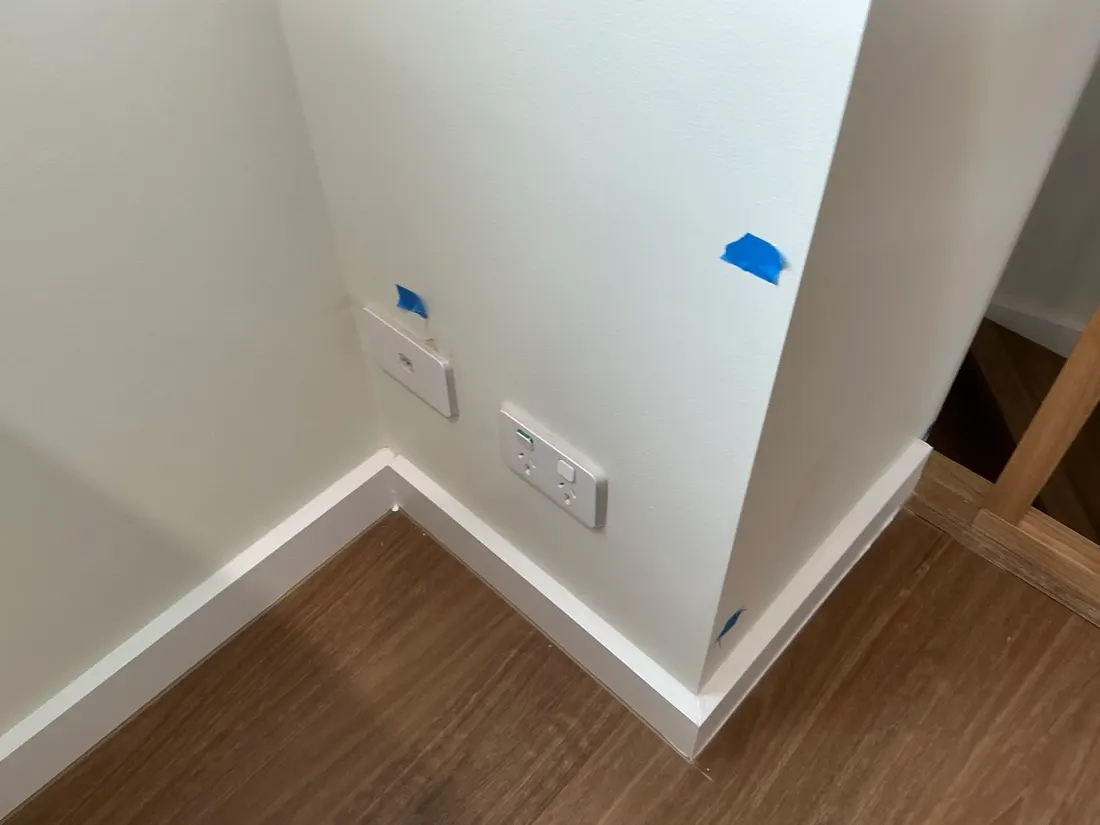
After hundreds of Practical Completion Inspections across Brisbane and South East Queensland, certain defects appear on nearly every report. Some are minor. Some are not. All of them are your builder's responsibility to fix before you accept the keys — but only if you find them first.
Here are the ten defects we find most consistently at PCI stage, what they mean for your home, and why they matter.
1. Wet Area Waterproofing Non-Compliance
Waterproofing is the single most common and most consequential defect category in new Queensland homes. At PCI stage we regularly find shower membranes that haven't been applied to the correct height, junctions between the membrane and drain that aren't properly sealed, and areas where the membrane has been damaged by the tiling contractor before anyone noticed.
Under NCC Volume 2 Part 3.8.1.1 and AS3740, wet area waterproofing must be applied to a minimum height of 1800mm in shower enclosures and must be continuous across all floor and wall junctions. When it isn't, water penetrates behind tiles, into the substrate and eventually into the structure. The resulting damage — mould, structural timber decay, failed adhesive — is one of the most expensive rectifications in residential construction once tiles are down.
At PCI stage, your builder must demonstrate waterproofing compliance before you accept. If the membrane wasn't inspected before tiling, request evidence from the waterproofing contractor and your builder's certifier.
2. Site Drainage Falls Toward the Building
Surface water drainage is a consistent problem across new Queensland builds, particularly on sloping blocks where cut and fill has been used. We regularly find finished ground levels that direct stormwater toward the building rather than away from it — a direct breach of QBCC Standards and Tolerances Section 2.3 and BCA Part 3.1.2.3.
The consequences are significant: water ponding against footings creates conditions conducive to structural movement, damp ingress and termite activity. The QBCC Standards and Tolerances require surface water to be directed away from the building, with ground levels graded a minimum of 50mm over the first metre from the structure.
This defect is often missed by buyers at handover because it only becomes apparent after rain. Our inspection includes assessment of finished ground levels regardless of weather conditions.
3. Incomplete or Defective Paintwork
Internal paint defects are among the most visible at PCI and among the most commonly disputed. Builders often argue that minor paint defects are within tolerance — but the QBCC Standards and Tolerances are specific. Paint finishes are defective if they show brush marks, roller texture variation, runs, sags, bare patches or colour variation visible from 1.5 metres under natural light.
We document every paint defect with photographs taken under the correct lighting conditions, from the correct viewing distance. This documentation is what gets disputed paint defects rectified.
Ready to book your inspection? A VG Inspect QBCC-licensed inspector attends every job.
Book an Inspection4. Missing or Incomplete Termite Barrier Documentation
Under AS3660.1 and NCC Part 3.1.4.3, a durable notice must be permanently fixed in a prominent location — typically the meter box or a kitchen cupboard — detailing the termite management system installed, the installing company, the date of installation and the inspection requirements to maintain warranty.
At PCI stage, this notice is frequently missing, temporary, illegible or incorrectly located. Without it, your termite barrier warranty may be void from day one. This is a straightforward rectification — but it must be in place before handover.
5. Roof Fixing Deficiencies
Roof defects are among the most consequential we find because they directly affect the structural integrity and weatherproofing of the home. At PCI stage we regularly identify roof sheets that are insufficiently screwed, ridge capping that isn't fully sealed, valley iron that has gaps, and flashings that don't extend the required minimum distance past window and door openings.
In Queensland's wind classification zones — particularly N2 and N3 areas across SEQ — roof fixing requirements under NCC 3.5 and manufacturer specifications are non-negotiable. A roof that fails in a storm event within the first 12 months creates a warranty claim situation that is expensive, disruptive and entirely avoidable.
6. Plasterboard and Cornice Defects
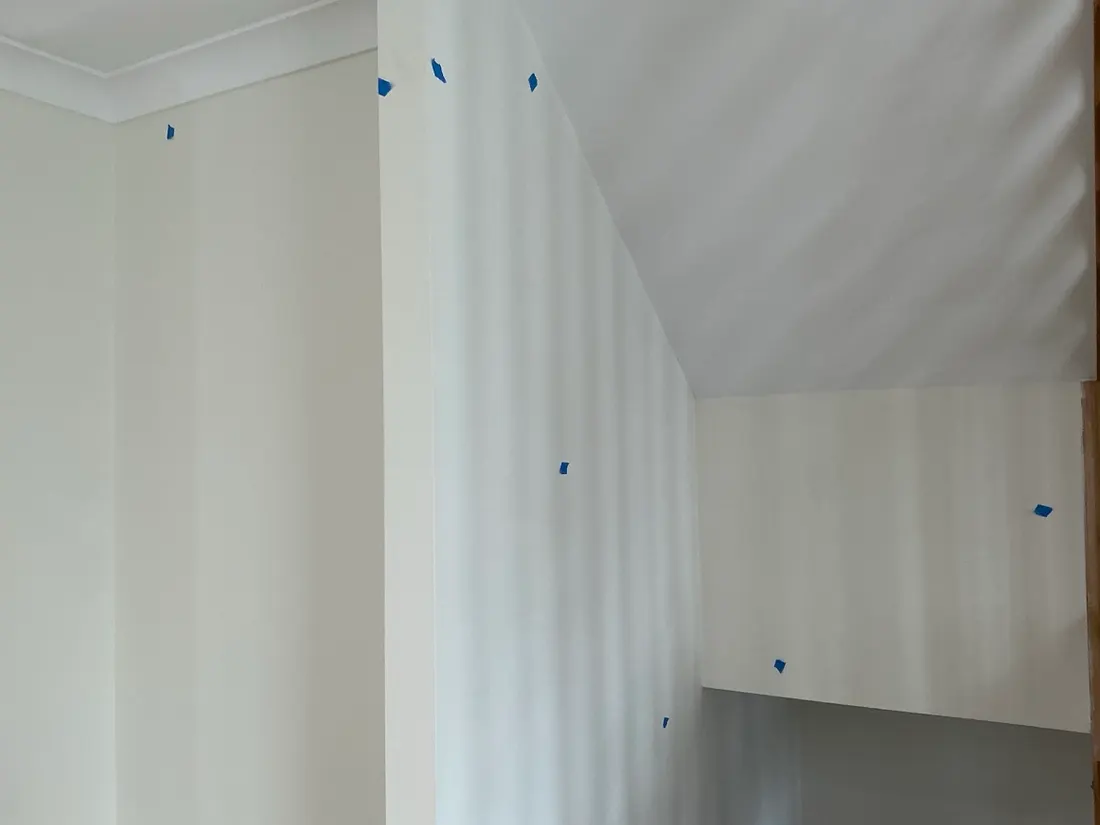
Plasterboard defects range from visible nail pops and joint ridging to bowed walls and ceilings that exceed the QBCC tolerance of 4mm deviation in any 2-metre length. Cornice defects including cracking at corners, gaps between cornice and ceiling, and incomplete installation are consistently identified.
Builders often argue that minor plasterboard movement is normal settling. The QBCC Standards and Tolerances are clear: wall surfaces are defective if they deviate from vertical by more than 4mm in any 2-metre height, and ceilings are defective if they deviate from horizontal by more than 4mm in any 2-metre length. These tolerances apply at PCI — not after a settling period.
Ready to book your inspection? A VG Inspect QBCC-licensed inspector attends every job.
Book an Inspection7. Window and Door Operation Issues
Windows and doors that bind, stick, don't seal correctly or have defective hardware are consistently found at PCI. Under QBCC Standards and Tolerances Section 9.7, doors and windows are defective if they don't operate smoothly, if the clearance between door leaf and frame is outside the range of 2mm–4mm, or if weather seals don't perform their intended function.
Head flashings above windows are a related defect — frequently missing entirely or installed short of the required 150mm minimum extension past the opening on each side.
8. Incomplete Builder's Contract Items
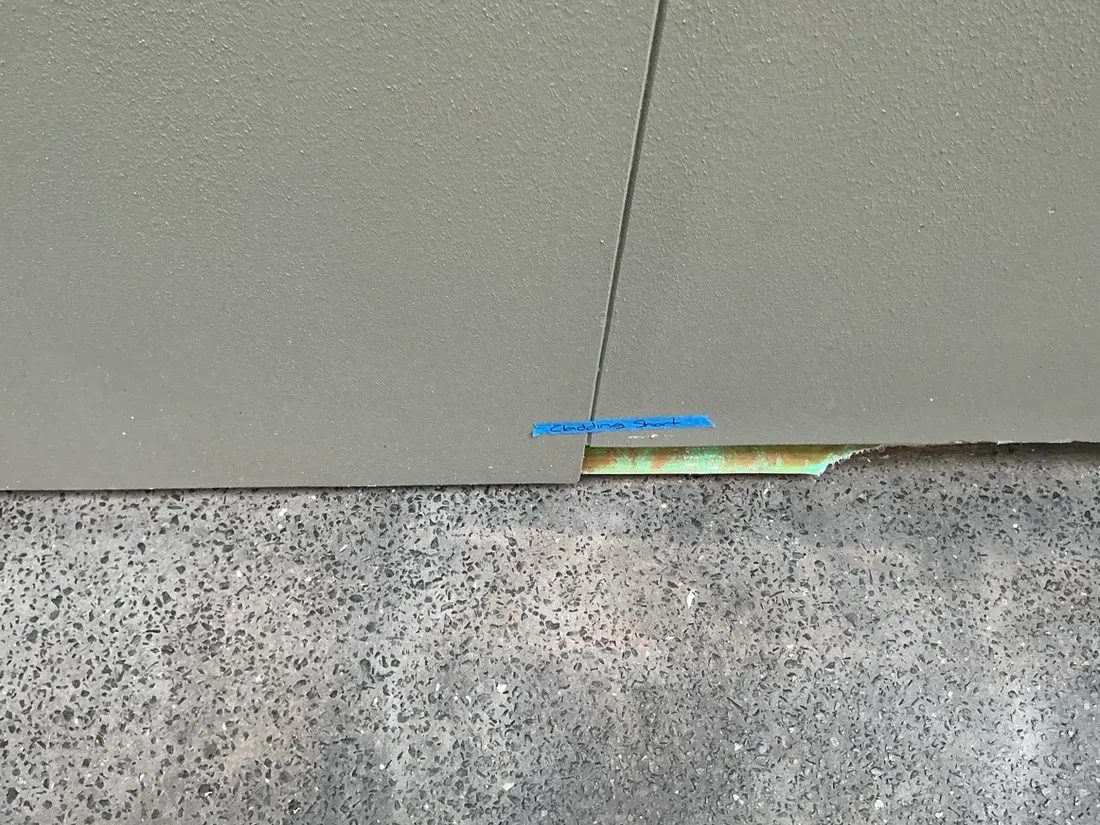
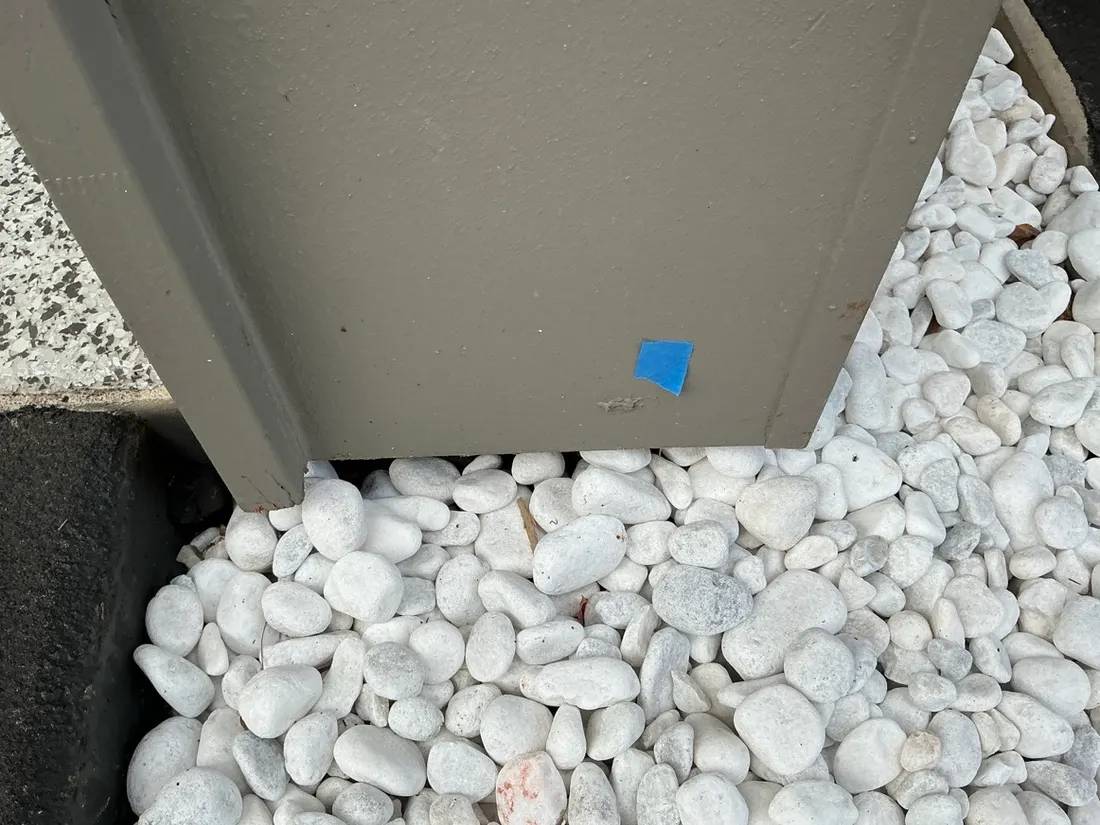
One of the most important aspects of a PCI inspection is comparison against your builder's contract specification. Items that were specified and paid for but not installed or not completed to specification are common findings — landscaping not completed, fencing incomplete, appliances missing, tile selections incorrect, or finishes substituted without approval.
Your VG Inspect report documents every contract item that is incomplete or non-compliant, giving you a formal basis to withhold settlement until rectification is complete.
9. Driveway and Path Defects
External concrete defects including cracking, surface finish problems, incorrect falls and missing control joints are consistently identified at PCI. Under AS3727 and QBCC Standards and Tolerances Section 2.1, concrete pavements are defective if crack widths exceed 1mm, if flatness deviation exceeds 15mm from a 3-metre straight edge, or if there is stepping greater than 5mm between adjacent elements.
Control joints — saw cuts installed within 18 hours of pouring to control shrinkage cracking — are frequently missing or inadequate, leading to uncontrolled cracking that becomes a warranty dispute.
Ready to book your inspection? A VG Inspect QBCC-licensed inspector attends every job.
Book an Inspection10. Incomplete or Non-Compliant Electrical and Plumbing
At PCI stage we regularly find electrical GPOs that aren't flush or level, exhaust fans that aren't vented to the exterior, hot water overflow relief valves that aren't correctly plumbed, and AC outdoor units that aren't bolted down or levelled to manufacturer specification.
Each of these is a specific QBCC or Australian Standards non-compliance. Each is also a warranty item that, if not identified at PCI, becomes progressively harder to have rectified as months pass.
What to Do If You Find These Defects
Every defect found at PCI is your builder's responsibility to rectify before you accept the keys. Your VG Inspect report documents each defect against the specific QBCC Standards and Tolerances clause or NCC section that has been breached — giving you the formal basis to require rectification rather than just requesting it.
Do not sign handover documents until all defects are resolved or a written agreement is in place for their rectification. Once you accept the keys, the leverage shifts.
See our full PCI checklist — how we inspect your home, section by section, against the QBCC Standards & Tolerances Guide, the NCC and the Australian Standards.
If you're approaching handover on your new Brisbane or SEQ build, book your PCI inspection with VG Inspect before you accept. It's the most important inspection of your entire build.