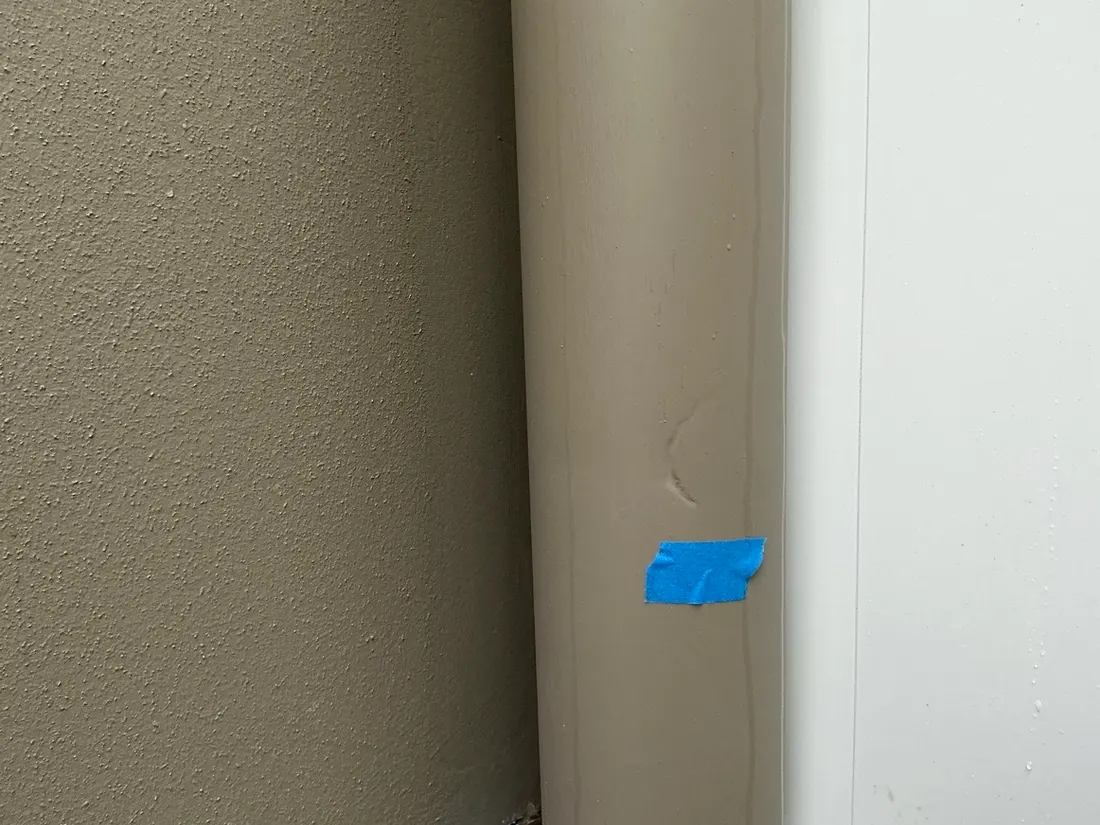
I'm going to do something unusual for a building inspector.
I'm giving you my complete Practical Completion checklist — the same 17-category, defect-by-defect framework I run through on every PCI I do. The exact list I use on my iPad on site when I'm walking your builder's finished home.
Why? Because you should know what a professional inspector actually checks. Because your builder isn't going to tell you. And because most defects at practical completion aren't hidden — they're in plain sight if you know where to look.
This is a long guide. Bookmark it. Take it to site the day of your PCI walk-through with the builder. If you spot 3+ items on this list wrong or missing — book an independent inspection before you make the final payment.
📋 Free printable checklist: Download the Practical Completion (PCI) checklist (PDF) — every red flag from this guide on a single page you can print and take on site. No email required.
What "Practical Completion" Actually Means
Practical Completion (PC) is the contractual moment when your builder declares the home is finished enough for you to move in. It triggers two critical events:
1. The final payment is due. Usually 10% of the contract price. 2. The 12-month defect liability period begins. Anything the builder is going to fix under warranty gets fixed in this window.
Miss defects at PC and you pay full price for an incomplete home. Miss defects during the 12-month warranty and you own the problems forever.
The builder wants to close the contract, get paid, and move on. Your job at PC is to make sure they've delivered what you paid for. This inspection is your last real leverage.
The 17-Category Framework I Use on Every PCI
Every PCI report I write documents defects across these 17 categories. Nothing gets missed because the framework doesn't let it get missed. Here's what I'm looking at in each one.
1. Termite Management
Termites cause more damage to Australian homes than fire, flood, and storms combined. Your builder had to install a termite management system before the slab was poured. At PC, you're checking the installation is complete and not damaged.
What to look for: - Physical or chemical termite barrier certificate — must be on site (AS 3660.1:2014 compliance) - Barrier continuity around the slab perimeter — no gaps - Slab edge visible (not covered by soil, mulch, or paving that could bridge the barrier) - Weep holes in brick walls not blocked - No cracks in slab that would allow termite entry - Termite trap inspection points (if any) accessible
Red flags: No termite management certificate provided; landscape mulch or garden bed piled against the slab edge (bridges the barrier); rendered slab edge with no inspection zone visible; sliding door tracks not sealed to slab edge.
Real defect I find: Slab edge covered by builder's landscaping to make it "look nicer" — completely voids the termite barrier and voids your warranty.
Ready to book your inspection? A VG Inspect QBCC-licensed inspector attends every job.
Book an Inspection2. BAL (Bushfire Attack Level) & Safety
Non-negotiable safety items. If any of these fail, the home shouldn't get a Certificate of Classification.
What to look for: - Smoke alarms installed in every bedroom + hallway + living areas (per NCC) - Smoke alarms hardwired + interconnected (they all sound when one triggers) - Stair handrails continuous, secure, at correct height (NCC 3.9.2) - Balustrades over 1m drop: minimum 1000mm high, no gaps larger than 125mm - Deck / balcony edge protection compliant - Pool fencing compliant (if applicable) - Bushfire construction requirements met (BAL rating) if in a bushfire zone
Red flags: Missing smoke alarms (very common — builders forget bedrooms); handrails missing on staircases; balustrades with vertical gaps a child could climb through; BAL requirements ignored if property is BAL-19 or higher.
Real defect I find: Stair handrail absent — NCC 3.9.3 requires it, builder said "we were going to add it later." Not acceptable at PC.
3. Slab & Driveway Defects
Concrete work is the most expensive to fix later. Check it now.
What to look for: - Driveway poured, finished, cured - Slab edges to NCC standard — no crumbling, no honeycombing - Slab pathways at edges poured and level - Under-deck slab poured - Slab-to-slab expansion joints where required - No cracks wider than 1mm (per QBCC S&T Section 3.12) - Concrete finish consistent (broom or trowel, not mixed) - Falls to storm water grates working (test with water) - No standing water anywhere
Red flags: "Pathway and under-deck slab not poured — concrete works incomplete at time of inspection" (I see this constantly); cracks that will only get worse; uneven driveway surface; puddles that don't drain within an hour after rain.
Real defect I find: Builder advised unfinished external concrete as a "variation to contract" — no, unfinished slab isn't a variation, it's incomplete work.
4. Frame & Preplaster (Visible Elements)
Most framing is hidden behind plaster at PC, but some visible framing remains — laundry cabinetry backs, garage walls, service penetrations.
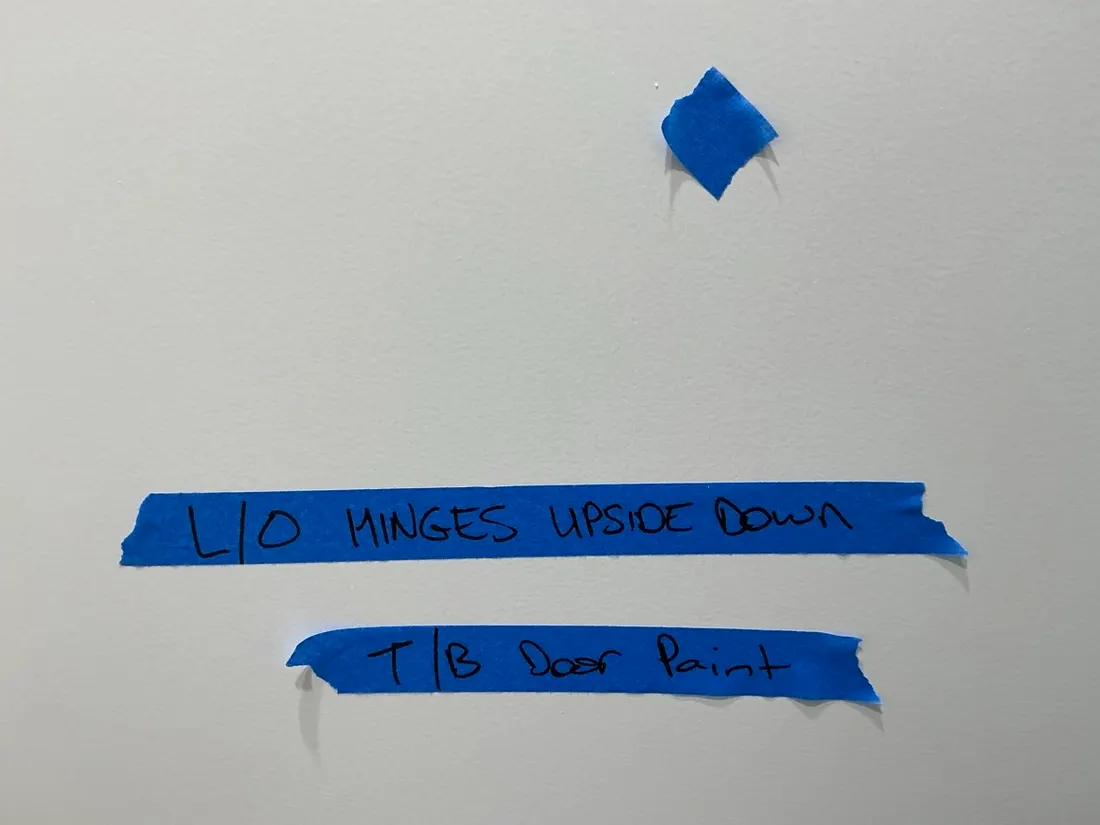
What to look for: Plaster patches complete in laundry (behind sink); kitchen return walls plastered; service access panels installed neatly; no exposed framing timber where plaster should be; all visible frame junctions clean.
Real defect I find: Plaster patch required in laundry right-hand side of sink — recommended trade: plasterer. Small fix, easy to catch, easy to miss.
Ready to book your inspection? A VG Inspect QBCC-licensed inspector attends every job.
Book an Inspection5. Walls, Gaps, Cladding & Render
The visible external and internal wall surfaces — where finish quality separates good builders from average ones.
What to look for: - Render finish smooth and consistent — no bulges, texture changes, or thickness variations (QBCC 10.2) - Render around windows and doors clean - Cladding aligned, joints tight - Weatherboards straight — no bowing - Wall junctions between internal and external walls clean - Silicone joints continuous, no gaps, no lumps - Brickwork mortar joints filled and tooled consistently - Weep holes clear (not blocked with mortar) - Corner beads straight
Red flags: Render blemishes visible from normal viewing position (the QBCC standard — if a normal person can see it, it's a defect); cladding gaps > 5mm without expressed joint detail; bulging or wavy walls; missing render at cladding-to-render junctions; sealant split, missing, or the wrong colour.
Real defect I find: Render finish inconsistent — variations in texture, colour or thickness visible from normal viewing position. To be rectified per QBCC 6.2 and manufacturer application specifications before handover.
6. Plumbing & Electrical
Everything that plugs in, turns on, drains, or connects to a service.
Plumbing: Every tap turns on and off cleanly; hot water arrives at every tap (test all of them); water pressure consistent; no leaks under any sink or vanity; toilets flush and refill; downpipes attached to walls and connected to stormwater; AC condensate drains connected to stormwater gully (NCC Vol.2 3.12.1); hot water system installed and commissioned; bathroom and kitchen mixers working; bathroom exhaust fans working.
Electrical: Every GPO has a face plate; every light switch works; every downlight works (test them all); fans work (all speeds); AC works (heat and cool modes); rangehood works; cooktop and oven work; data and TV outlets terminated; smoke alarms tested; solar (if fitted) commissioned; meter box tidy and labelled.
Red flags: Missing face plates on GPOs (very common); downpipe clips missing (AS 3500.3 requires them); AC condensate drain not connected to stormwater (major termite risk per NCC and AS 3660.1); hot water system not fitted or not electrically connected; bathroom vanities not plumbed in; strip lights above toilets not secured (AS/NZS 3000:2018).
Real defect I find: Ensuite fixtures including basin mixers and vanities not plumbed in — installation to be completed before handover per AS/NZS 3500.1. If it's not plumbed at PC, don't sign off.
7. External Deck & Fixing Defects
If your home has an alfresco deck, external stairs, or external timber — check every board.
What to look for: Decking boards straight, aligned, no cupping; no damaged or split boards; screws and fixings finished neat and rust-free; balustrade posts plumb and secure; handrail continuous and smooth; external stair treads level and secure (no wobble); deck oil/stain finish consistent; gaps between boards even (typically 3-5mm); framing beneath deck galvanised or treated.
Red flags: Damaged decking boards; wobbly stair treads; bent or rusting fixings; deck oil finish incomplete or inconsistent.
Real defect I find: Damage to decking boards and damage to external stair tread — recommended trade: carpenter.
Ready to book your inspection? A VG Inspect QBCC-licensed inspector attends every job.
Book an Inspection8. Windows & Doors (External)
External openings are where weather gets in. Test every single one.
What to look for: Every window opens and closes cleanly; sliding windows glide smoothly (rollers not worn or flat-spotted); window locks engage; sliding doors track smoothly (test heavy stackers especially); fly screens fitted and undamaged; weather seals continuous; no scratches on glass (viewable from normal distance = defect per QBCC 13.4); frame paint consistent; external sills sloped for drainage; sealant around frames continuous.
Red flags: Window rollers with flat spots (operation impaired — replace before handover); sliding doors that jump the track; missing fly screens; glass scratches; seals with visible gaps.
Real defect I find: Window roller worn/damaged with flat spot evident — operation impaired — roller to be replaced before handover.
9. Paint
Paint is 30% of the visual quality of a home. Bad paint work is instantly visible.
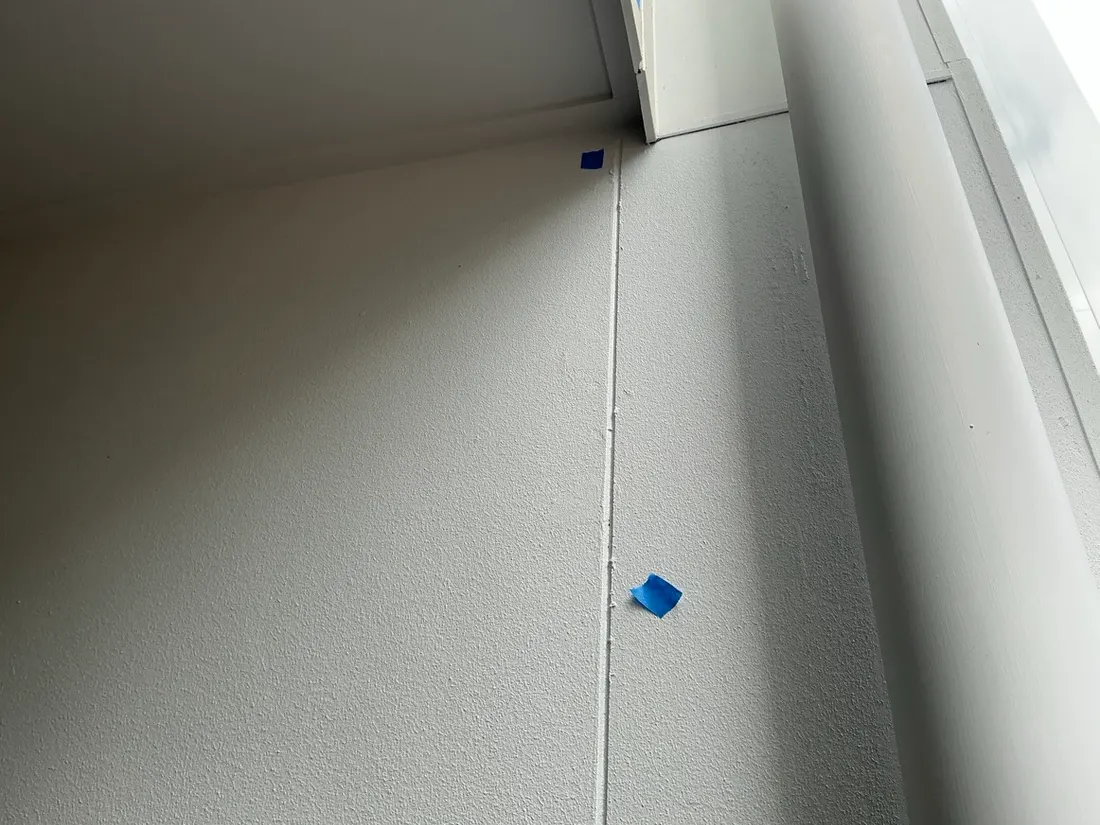
What to look for: Consistent coverage — no thin or "starved" areas; no brush marks; no roller stipple where it shouldn't be; colour matches specification; corner cuts clean; skirting/trim paint separates cleanly from wall paint; meter box painted; external man-holes and service pipes painted where required (QBCC 13.2); no paint splatter on floors, tiles, or hardware; ceiling paint uniform; touch-ups feathered, not visible as patches.
Red flags: Bare timber showing through; touch-ups that look worse than the defect; overspray on windows, tiles, benches, floors; missed areas around meter boxes, downpipes, penetrations; wall and ceiling colours mixing at the cornice edge.
Real defect I find: Paint touch-ups required — starved areas, patching/holes, pipes, meter box, man-hole — all to be completed per QBCC 13.2. External areas need re-inspection after concrete pathways are poured for splatter and additional damage.
10. Tile & Silicon Grout Defects
Tile work is where corners get cut fastest.
What to look for: No cracked, chipped, or pitted tiles (QBCC 12.4 and 14.3); tile lippage under 2mm between adjacent tiles (1.5mm for polished, 1mm for narrow joints — AS 3958.1); grout joints consistent width; grout free of pinholes, voids, or crumbling (AS 3958.1); grout colour uniform; silicone at wall/floor, wall/wall and wall/bench junctions continuous and smooth; silicone colour matches; no construction staining on tiles (QBCC 12.4); splashbacks aligned and sealed; feature tiles centred.
Red flags: Cracked tiles (replace, don't fill); grout crumbling out of joints; silicone with gaps, split, or wrong colour; excessive lippage (a knife catches on the edge); tile staining from unwiped grout.
Real defect I find: Tiles cracked, pitted or chipped — to be replaced before handover per QBCC 12.4 and 14.3. Not repairable — must be replaced.
Ready to book your inspection? A VG Inspect QBCC-licensed inspector attends every job.
Book an Inspection11. Windows & Doors (Internal)
Every internal door and fitted wardrobe door.
What to look for: Every internal door closes cleanly (no dragging on carpet or floor); doors don't swing open or closed on their own (out of plumb); handles and locks operate smoothly; hinges secure, screws present, no squeaking; robe doors track smoothly; bi-fold doors align and fold smoothly; cavity slider doors close fully into the cavity; door bases not warped; door frames plumb; hardware colour and style consistent throughout.
Red flags: Doors that don't close without lifting; robe doors that jump the track; warped doors; cavity sliders that jam; missing door stops.
Real defect I find: Robe door not tracking/operating correctly — to be adjusted before handover. Also common: door base warping to ensuite doors — bottom rail to be sanded back, resealed and repainted to rectify minor warping and prevent moisture ingress.
12. Cabinetry
Kitchen, laundry, bathroom, robes — every cabinet and drawer.
What to look for: Doors align — consistent gap between doors and drawers (QBCC 11.4); soft-close working on every drawer and door; push-to-open working on handleless doors; screw heads capped where visible (AS 4386); no scratches, chips, dents (QBCC 1.5); edge banding continuous; shelf front edges banded; panel joins tight; toe kicks installed and secured; cabinetry sealed to walls with silicone (QBCC 11.9); vanity and basin cutout sealed; cutout sizes match penetration covers.
Red flags: Uneven gaps between cabinet doors; screwheads visible (should be capped); panel damage; missing edge banding; push-to-open not functioning; sink or basin cutout with a gap around the penetration cover.
Real defect I find: Cabinet doors/drawer fronts not aligned — inconsistent gaps between doors and drawers — to be adjusted before handover per QBCC 11.4. This is 15 minutes of adjustment work often skipped.
13. Wet Areas
Bathrooms, ensuites, powder rooms, laundry — every wet zone.
What to look for: Silicone at every wall/floor, wall/wall and wall/vanity junction (AS 3740); silicone continuous, no gaps; floor waste at the low point of the fall; test the fall with water (pour a cup near the shower entry — water should flow to the drain within 10 seconds); shower screen sealed to floor; bath sealed to walls and floor; no water pooling after the test; tap escutcheons flush and sealed; toilet base sealed to floor; exhaust fan actually drawing.
Red flags: Water pooling anywhere after a shower test; silicone missing at any junction; shower screen with gaps at the floor; toilet base loose or unsealed; bath overflow not connected to drain.
Real defect I find: Silicone substandard in wet areas — missing or poorly applied — to be rectified before handover per AS 3740. And: fall-back on a tile ledge in a bathroom (non-compliant per AS 3740 — waterproofing failure risk).
Ready to book your inspection? A VG Inspect QBCC-licensed inspector attends every job.
Book an Inspection14. Wall, Ceiling, Garage & Stairs Defects
Structural and surface elements you can see.
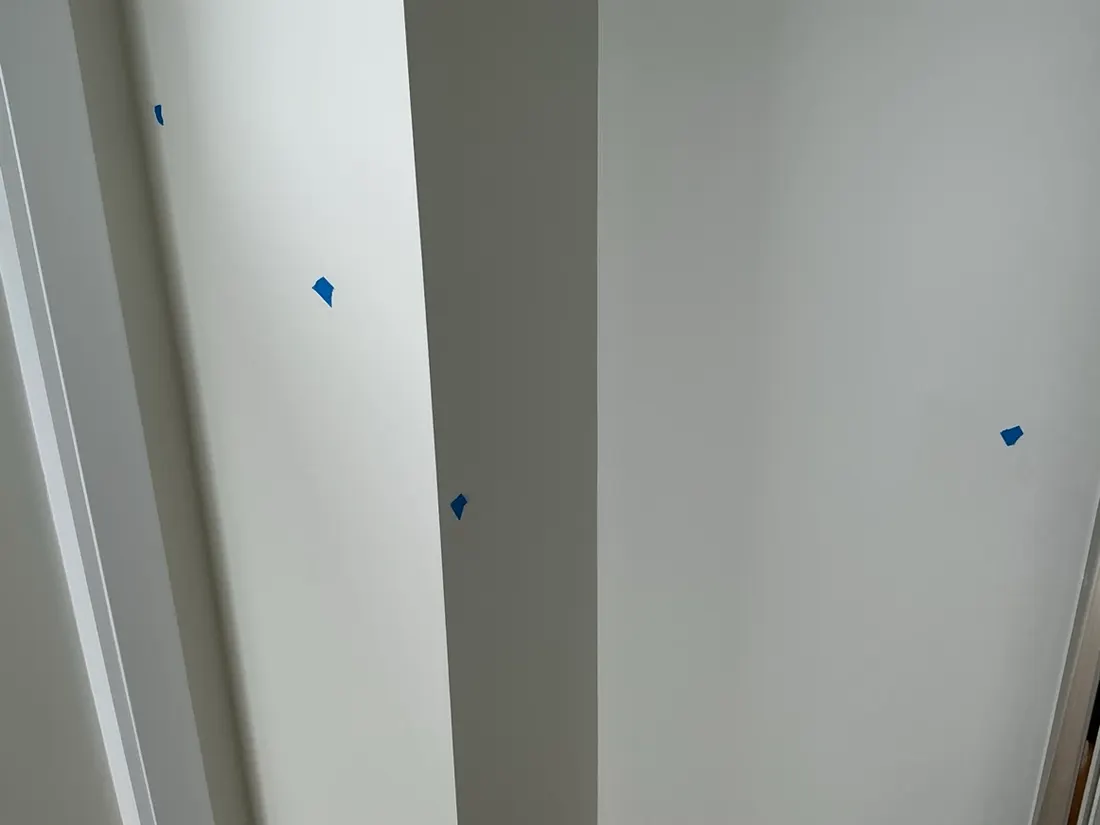
What to look for: Walls plumb (use a level or straight edge — check for humps and bows); ceiling flat — no roller marks, no sagging (QBCC 10.9 and AS/NZS 2589); cornice lines straight and sealed; garage door opens and closes smoothly (test 3 cycles); garage door seal continuous; garage floor level and finished; stairs consistent riser height; stair treads secure — no squeaks or movement; staircase handrail continuous and at correct height; wall corners tight.
Red flags: Wall humps visible under raking light (a flashlight held at an angle reveals humps); ceiling sag or waves; inconsistent stair riser heights; garage door not sealing at the floor; cornice with gaps.
Real defect I find: Wall surface exhibits a hump — to be rectified to within tolerance per QBCC 10.9 and AS/NZS 2589. Usually a taping/sanding issue for the plasterer.
15. Internal Defects
Skirtings, architraves, joins, general finish quality.
What to look for: Skirting mitres tight at corners; skirting continuous — no gaps at floor; architraves aligned and mitred; wall/skirting joins caulked cleanly; no hammer marks in door frames or skirtings; cornice mitres tight; wall corners clean; no hairline cracks in plaster; powerpoint faceplates flush; AC grilles installed and aligned; ceiling penetrations sealed; ceiling access hatches finished.
Red flags: Skirting with 4mm+ gaps at bows (rectify per QBCC 13); skirting missing sections (common at ensuite doors); architraves not mitred properly; cornice mitres open; AC grilles crooked in the ceiling.
Real defect I find: Skirting boards gaps / not mitre-joined — top of stairs skirting, right-hand side, ~500mm long with a 4mm gap in a bow. And: skirting missing from ensuite to walk-in robe — carpenter to complete.
16. Cleaning
The builder must hand over a clean home. Construction dust, debris and residue is the builder's responsibility to remove.
What to look for: No construction debris under stairs, in cupboards, in wardrobes; no paint splatter on windows, benchtops, tiles, or floors; no sticky residues (labels not removed from windows, appliances); roof areas clean — no offcuts, no waste material (fire risk); gutters clean; meter box interior clean; cavity slider tracks clean; air return vents clean; no dust in AC grilles; appliances clean (some builders don't clean inside the oven).
Red flags: Roof areas containing construction debris (fire risk and gutter blockage); paint splatter on any surface; manufacturer labels still attached; construction debris in cupboards.
Real defect I find: Roof areas contain construction debris — off-cuts, waste material and installation residue to be removed from all roof areas before handover. A real fire risk over the life of the home.
Ready to book your inspection? A VG Inspect QBCC-licensed inspector attends every job.
Book an Inspection17. Incomplete Works
Everything the builder still needs to finish before PC can honestly be called "practical completion."
Common items that get "we'll do that later" treatment: front door perimeter fully sealed (moisture and pest ingress prevention per NCC); wall lights installed (not just wired and capped); all switch and GPO faceplates fitted; diffuser covers on kitchen and butler's pantry overhead lights; AC grilles installed; alfresco door flashing; ceiling insulation extended to all cavities; Yellow Tongue flooring properly screwed; door hardware complete; skirting to all rooms; every promised inclusion actually installed (check against your contract inclusions list).
Red flags: Builder saying "we'll finish that on your first warranty visit" — no, that's not warranty work, that's incomplete PC; any missing item from your contract's inclusions list; provisions (holes, wires, brackets) with the actual fixture missing; "cosmetic" items the builder dismisses (they're contractual items too).
Real defect I find: Wall lights not installed — provision in place, fixtures to be fitted and commissioned before handover. Diffuser covers to kitchen and butler's pantry overhead lights not installed. Air conditioning grille not installed. These aren't warranty items — they're incomplete work.
The 30 Red Flags — If You See ANY of These, Call an Inspector Immediately
1. Missing termite management certificate 2. Landscape mulch/soil against slab edge 3. Missing smoke alarms 4. Handrails missing on any stairs 5. Balustrades not compliant 6. Uncompleted external concrete work 7. Slab cracks wider than 1mm 8. Damaged decking boards 9. Missing fly screens 10. Window rollers with flat spots 11. Paint splatter on floors, benches, or tiles 12. Cracked tiles 13. Grout with pinholes or crumbling 14. Silicone gaps or missing sections 15. Doors that don't close cleanly 16. Warped doors 17. Uneven cabinet door gaps 18. Missing edge banding on cabinets 19. Water pooling in wet areas 20. Missing bathroom exhaust fans 21. Wall humps visible under raking light 22. Ceiling sags 23. Skirting gaps > 3mm at floor 24. Roof cavity with construction debris 25. Missing wall lights or GPO faceplates 26. Front door not sealed 27. Any electrical switch or fitting not working 28. AC not commissioned (heat + cool tested) 29. Any contract inclusion item missing 30. Builder saying "we'll fix that under warranty"
Any 3+ = book independent inspection immediately. Any 10+ = do NOT make final payment until rectified.
When to Book a Professional Inspection
I've just given you my complete checklist. You could try to do this yourself — some homeowners can. But here's what a professional inspector brings:
- A trained eye for defects you'd miss — subtle wall bows only visible under raking light, tile lippage over tolerance that looks fine, issues behind cosmetic finishes
- Independence — I'm not your builder's mate. Your builder has an incentive to close the contract; I have an incentive to protect you
- An independent report with photos — printed evidence you can use if you need to escalate to QBCC
- QBCC-licensed authority — my report carries weight in a dispute; a list on your phone doesn't
- Same-day delivery — the written report before you leave site
- A free 15-minute post-report call — I walk your builder through the report to prevent disputes
The average PCI report I write documents 15-30 defects. Most are minor. Some are major. All of them cost money to fix if you miss them at PC.
Ready to book your inspection? A VG Inspect QBCC-licensed inspector attends every job.
Book an InspectionVG Inspect PCI Pricing
- Standard home up to 220m²: $660 inc GST — same-day report
- Larger homes: custom quote — call 07 3180 8041
- Available: Monday–Friday across South East Queensland (Brisbane, Gold Coast, Sunshine Coast, Ipswich, Moreton Bay, Logan, Redlands, Scenic Rim)
Book your PCI: Call 07 3180 8041 or book online.
Where This Inspection Sits in Your Build
Independent stage inspections work best as a sequence — each one checks work that the next stage covers up for good. Here's the full pathway for a typical Queensland new-home build, and where practical completion fits:
1. Pre-Pour Slab Inspection — before the concrete truck arrives 2. Post-Pour Slab Inspection — after the slab is poured and stripped 3. Frame Inspection — Timber Frame or Steel Frame, depending on how your home is built 4. Pre-Plaster (Lockup) Inspection — before the plasterboard hides the services 5. Practical Completion (PCI) Inspection — you're reading this now
Previous: ← Pre-Plaster (Lockup) Inspection
Practical completion is the last stage before you take the keys — but it isn't the last inspection worth booking. About eleven months in, get a warranty inspection before your 12-month builder's warranty expires, while the builder is still obliged to fix defects.
Booking the whole sequence with one independent inspector means every stage is checked against the last. Book your inspection or call 07 3180 8041.
---
This checklist is general educational information based on Australian Standards and QBCC guidance. Your specific home may have contract inclusions, engineered features, or site-specific requirements that fall outside this general framework. This guide is not a substitute for a licensed inspection.